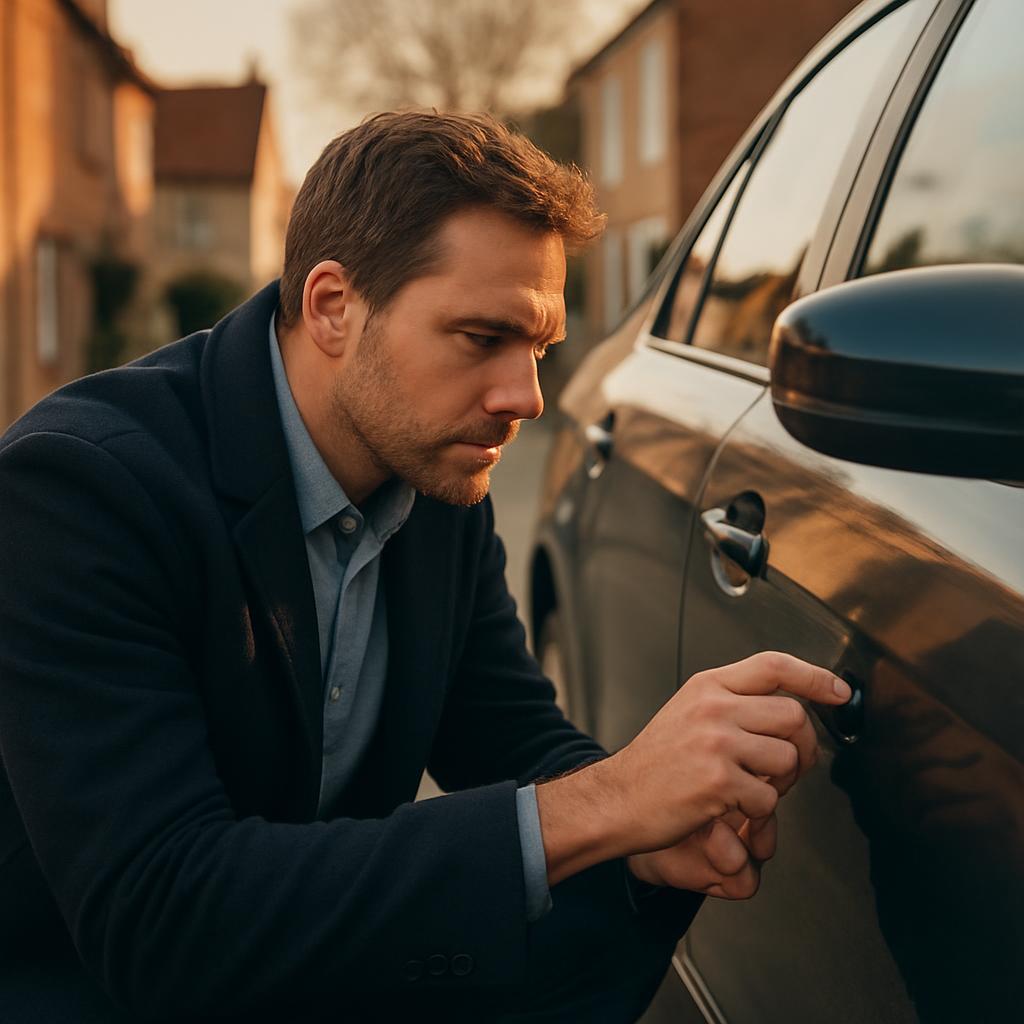
Car Break-In Signs: What Emsworth Residents Should Know
Find Out More →How to Tell if Someone Broke Into Your Car
Look for obvious physical damage first: broken windows, dents around the door frame, scratches on the lock cylinder, or pry marks on the door edges. Check inside for disturbed items, missing belongings, or the interior light left on. Try your door lock—if it's stiff, won't turn smoothly, or feels damaged, that's a strong sign of forced entry. If the door opens without using your key fob or key, someone's tampered with the locking mechanism.
What to Look for Outside Your Car
Start with the obvious stuff. Walk around the vehicle slowly and look at all four sides. A broken window is unmissable, but forced entry often leaves quieter clues—small scratches around the door handle, gouges in the paint near the lock, or the rubber seal around the door pushed inward. Check the dashboard and steering column area for damage; thieves sometimes try to access the ignition without a key.
Look at your locks themselves. The lock cylinder (the bit you insert your key into) should sit flush with the door. If it's cracked, splintered, or protrudes at an odd angle, it's been forced. The keyhole shouldn't have fresh scratches or debris around it. Your door frame—the metal part the door closes against—should be straight and tight. Gaps or misalignment suggest someone's pried the door.
What to Check Inside the Car
Once you've checked the outside, look at the interior. Your steering wheel should be in the position you left it. Wires hanging down from under the steering column or dashboard, or tape on them, means someone's tried the ignition. Check your glove compartment, centre console, and door pockets—are things disturbed? Loose or missing items, papers scattered, or the seat position changed all point to someone rummaging inside.
Don't overlook the small details. Is your interior light on when it shouldn't be? Has the sun visor been flipped? Is anything missing from your phone charger to spare change? Even if nothing's obviously gone, disturbance of personal items is a sign. Check under the seats and in the boot—thieves often leave tools behind.
Testing the Locks Themselves
This is where a locksmith's eye matters. Your key should turn smoothly in both directions—lock and unlock. If it feels stiff, gritty, or catches halfway, the mechanism's been damaged or jammed. Try your door handle from the outside: it should operate normally. From the inside, the manual unlock button should work without resistance.
Use your key fob to lock and unlock the car from a distance. If it doesn't respond, the fob might be flat, but also try the physical key in the door lock itself. If the physical key won't turn or feels wrong, the lock's been forced or the internal mechanism is damaged. Read more here on what a properly functioning lock should feel like and when it's time to get it checked.
Red Flags That Mean You Need a Locksmith
If you notice any of the signs above, don't ignore them. A forced or damaged lock won't protect your car—and more importantly, you won't know if the next break-in attempt is coming. Water damage around doors (Emsworth's close to the harbour and flooding can affect parked cars) can also compromise locks, making them easier to force. Even if nothing was stolen this time, a damaged lock is an open invitation.
Call a locksmith if: your key doesn't turn smoothly, the lock cylinder is cracked or loose, the door doesn't close properly, your key fob has stopped working alongside visible lock damage, or you've found evidence of tampering but aren't sure how serious it is. A locksmith can tell immediately whether the lock is still safe to use or needs replacing. It's not just about your belongings—a compromised lock affects your car's security entirely.
What a Locksmith Will Do
A locksmith in Emsworth can assess whether your lock is salvageable or needs replacement. They'll examine the lock mechanism closely, check if internal components are damaged, and test the whole system—not just whether the key turns, but whether it's secure against forced entry. As we covered in this guide, a professional inspection takes 10–15 minutes and saves you from guesswork.
If the lock can't be safely repaired, they'll replace it quickly. If it's fixable, they'll sort it and make sure your key works smoothly again. Most importantly, they'll confirm your car is actually secure before you drive away.
Don't Wait—Get It Checked
Break-ins often happen in clusters, especially in areas with regular foot traffic. If your car's been hit once, thieves know your neighbourhood and may come back if the lock's still compromised. The longer a damaged lock stays unfixed, the more vulnerable you are. Find out more about how local businesses protect their vehicles.
If you've found any of these signs—scratches, damage, a stiff lock, or items disturbed—don't drive around worrying. Contact Locksmith Emsworth today. A quick phone call gets you a professional assessment, and we can often sort it the same day. Better to know your car is genuinely secure than to keep checking over your shoulder every time you park.
Looking for Locksmith near Emsworth?
We have secure, flexible units available in the area. Get in touch with Locksmith Emsworth today.
Find Out More →